Over the past two years, enterprise AI architecture has been dominated by a single paradigm: Retrieval-Augmented Generation (RAG). Engineering teams carved up corporate PDFs, generated vector embeddings, stored them in Pinecone or pgvector, and retrieved top-k chunks into prompt context windows to ground language models. But as organizations transitioned from simple informational Q&A chatbots to autonomous, action-oriented AI agents, the fundamental limitations of pure RAG quickly became obvious.
Static vector stores cannot query live database state, cannot execute transactional ERP updates, and require brittle custom integration glue code for every internal tool. Enter Anthropic's open-source **Model Context Protocol (MCP)**—widely heralded as the 'USB-C port for artificial intelligence.' Over my 12+ years of architecting enterprise distributed microservices and custom web development solutions, I have evaluated both paradigms across mission-critical production environments. Just as we optimized LLM API token costs and deployed agentic helpdesk automation, choosing the right architecture between MCP and RAG dictates whether your AI initiatives scale sustainably or collapse under technical debt.
In this comprehensive architectural comparison, I break down the fundamental mechanics of RAG vs. MCP, evaluate their strengths and failure modes across enterprise workloads, and demonstrate how leading engineering teams combine both into a unified, agentic hybrid architecture.
Quick Answer: MCP vs. RAG at a Glance
RAG and MCP are not mutually exclusive competitors—they solve two fundamentally different problems at different layers of the AI stack. RAG is your Knowledge Retrieval Layer for static, unstructured documents (PDFs, wikis, policies). MCP is your Interoperability & Execution Protocol for live, stateful systems (APIs, databases, Git repos, ERPs). Enterprise architectures use RAG to *know* the context and MCP to *take action*.
| Architectural Vector | Retrieval-Augmented Generation (RAG) | Model Context Protocol (MCP) |
|---|---|---|
| Primary Architectural Purpose | Static/Semi-static Knowledge Retrieval & Grounding | Standardized Dynamic System Interoperability & Action-Taking |
| Underlying Mechanism | Vector embeddings, similarity search (Cosine/Dot), chunking | Client-Server Protocol (JSON-RPC over stdio / SSE) |
| Data Nature | Unstructured documents (PDFs, Notion, Slack archives) | Live structured data (Postgres SQL, REST APIs, Git, File systems) |
| Read / Write Capability | Read-Only (Retrieves text snippets to inject into prompts) | Bi-directional (Reads resources AND executes stateful tools/actions) |
| Data Freshness | Stale by seconds to days (Requires vector re-indexing pipeline) | Real-time (Queries live production APIs on demand) |
| Integration Complexity | $M \times N$ custom glue code for every model & database | Standardized Universal Protocol (One server works with all MCP clients) |
| Ideal Use-Case | Legal compliance search, internal policy wikis, HR handbooks | Agentic code generation, ERP updates, multi-tool orchestration, live CRM actions |
Deep Dive: How Retrieval-Augmented Generation (RAG) Works
RAG solves the fundamental problem of LLM knowledge cutoffs and private enterprise data isolation. A standard RAG pipeline operates across four sequential phases:
- Ingestion & Chunking: Unstructured documents (DOCX, PDF, HTML) are extracted, stripped of layout boilerplate, and partitioned into discrete token chunks (e.g., 512 tokens with 50-token overlap).
- Embedding Generation: Chunks are passed through an embedding model (e.g., `text-embedding-3-small` or Cohere Embed) to generate dense high-dimensional vectors representing semantic meaning.
- Vector Indexing & Similarity Search: Vectors are stored in an index (Pinecone, Qdrant, Milvus, pgvector). When a user submits a query, its embedding is compared against the database to retrieve the top-k most relevant chunks.
- Prompt Augmentation & Generation: Retrieved chunks are injected into the LLM system prompt as reference context, allowing the model to answer the query accurately.
The Limitations of Pure RAG in the Enterprise
- High Latency & Pipeline Brittleness: Embedding drift, poor chunk boundary splitting, and vector similarity hallucinations frequently retrieve irrelevant context.
- No Real-Time State: If a customer's subscription status or inventory count changed 5 seconds ago, RAG cannot know it unless an expensive streaming vector pipeline re-indexed the data.
- Zero Execution Capability: RAG is strictly passive. It can tell you what a policy says, but it cannot trigger a refund, deploy a container, or modify a database record.
Deep Dive: What is the Model Context Protocol (MCP)?
Introduced by Anthropic as an open-source standard, the Model Context Protocol (MCP) provides a universal client-server specification for connecting AI applications to external tools and data sources.
Before MCP, connecting an AI agent to five tools (Postgres, GitHub, Slack, Jira, NetSuite) required writing bespoke API wrappers for every individual LLM framework (LangChain, LlamaIndex, custom SDKs). This created a classic $M \times N$ integration nightmare.
MCP establishes a standardized JSON-RPC architecture where:
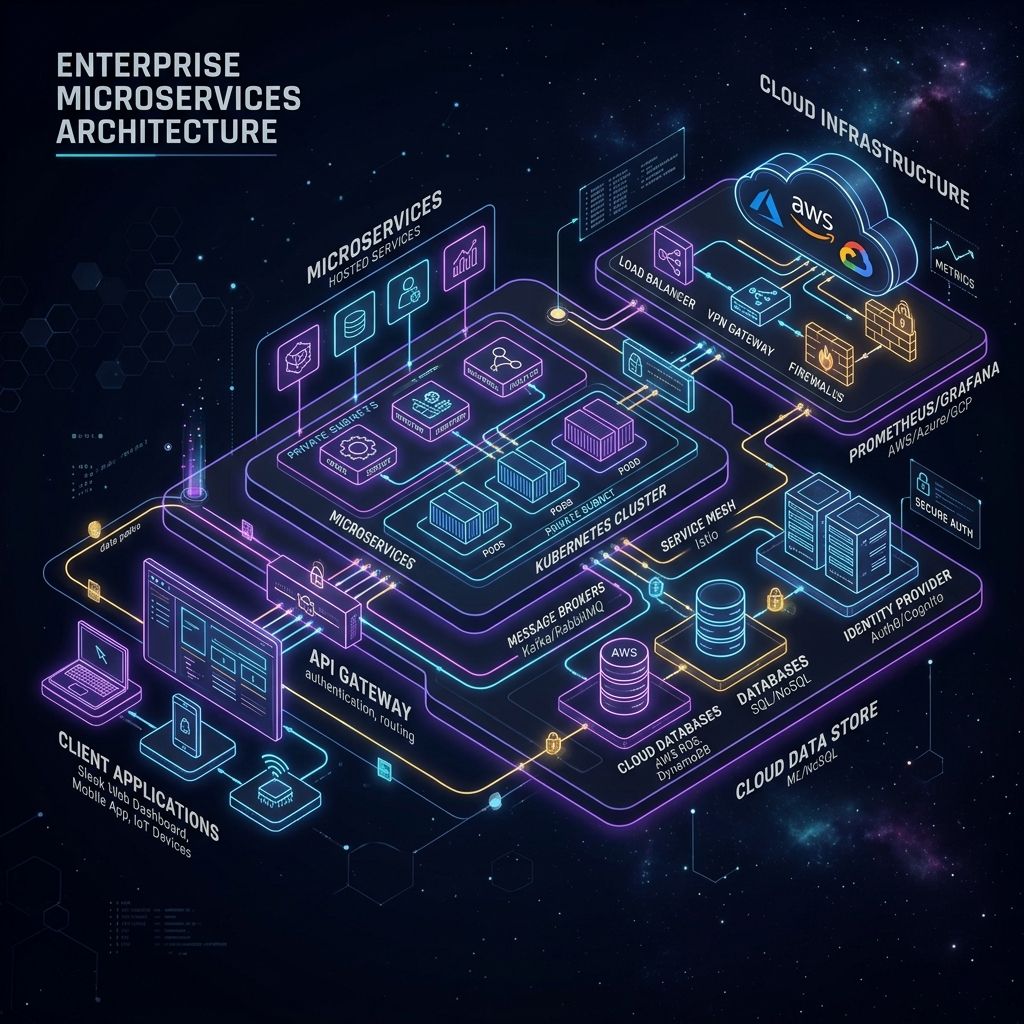
- MCP Hosts / Clients: The AI interface or agent runner (Claude Desktop, Cursor, Next.js agent server, custom IDEs) that discovers and coordinates connections.
- MCP Servers: Lightweight microservices that expose structured capabilities: Resources (direct data endpoints), Tools (executable functions with JSON schemas), and Prompts (reusable workflow templates).
- Transport Layer: Communicates locally via standard input/output (`stdio`) or remotely over Server-Sent Events (`SSE`) with HTTP POST.
The Ultimate Enterprise Architecture: The RAG + MCP Hybrid
Forward-thinking enterprise architects do not choose between RAG and MCP—they unify them into an event-driven agentic pipeline:
- Step 1 (Grounding with RAG): When an enterprise customer submits a complex invoice dispute, the agent queries a Vector RAG database to retrieve company refund guidelines, SLA tiers, and contractual terms.
- Step 2 (Execution with MCP): Armed with the policy context, the agent invokes an MCP Server connected to Stripe and NetSuite. The MCP tool verifies real-time payment status, checks authorization thresholds, and executes the credit memo directly in the ERP.
Architectural Blueprint: Building an MCP Tool Server & RAG Gateway in Next.js 15
Here is a production-ready Next.js 15 / TypeScript blueprint demonstrating how an AI agent coordinates a Vector RAG knowledge query with an MCP Tool Server execution:
// Example: Next.js 15 Server Action orchestrating RAG Context with MCP Tool Execution
'use server';

import { z } from 'zod';
import { vectorDb } from '@/lib/vector-store';
import { mcpClient } from '@/lib/mcp-client';
import { openai } from '@/lib/openai';

const EnterpriseQuerySchema = z.object({
  organizationId: z.string().uuid(),
  userPrompt: z.string().min(5),
});

export async function processEnterpriseAgentWorkflow(formData: FormData) {
  const parsed = EnterpriseQuerySchema.safeParse({
    organizationId: formData.get('organizationId'),
    userPrompt: formData.get('userPrompt'),
  });

  if (!parsed.success) {
    return { success: false, error: 'Invalid enterprise prompt payload.' };
  }

  // 1. RAG Layer: Retrieve Static Policy & Compliance Grounding
  const ragContext = await vectorDb.similaritySearch({
    query: parsed.data.userPrompt,
    namespace: parsed.data.organizationId,
    topK: 3,
  });

  const groundedSystemPrompt = `
You are an enterprise autonomous operations agent.
Use the following corporate policy context to govern your decisions:
${ragContext.map((c) => c.text).join('\n---\n')}
`;

  // 2. MCP Layer: Discover Active Tools from MCP Server Registry
  const availableMcpTools = await mcpClient.listTools();

  // 3. LLM Reasoning with Discovered MCP Tools
  const response = await openai.chat.completions.create({
    model: 'gpt-4o',
    messages: [
      { role: 'system', content: groundedSystemPrompt },
      { role: 'user', content: parsed.data.userPrompt },
    ],
    tools: availableMcpTools.map((t) => ({
      type: 'function',
      function: {
        name: t.name,
        description: t.description,
        parameters: t.inputSchema,
      },
    })),
  });

  const message = response.choices[0].message;

  // 4. MCP Execution: Execute Selected Tool via Standardized JSON-RPC
  if (message.tool_calls && message.tool_calls.length > 0) {
    const toolCall = message.tool_calls[0];

    const mcpExecutionResult = await mcpClient.callTool({
      name: toolCall.function.name,
      arguments: JSON.parse(toolCall.function.arguments),
    });

    return {
      success: true,
      executionType: 'MCP_TOOL_ACTION_EXECUTED',
      toolName: toolCall.function.name,
      result: mcpExecutionResult,
    };
  }

  return {
    success: true,
    executionType: 'RAG_INFORMATIONAL_COMPLETION',
    answer: message.content,
  };
}
Decision Framework: When to Use RAG vs. MCP
When architecting your next AI project, use this decision framework to allocate engineering resources:
- Choose Pure RAG When: Your primary goal is informational Q&A over massive, slow-changing document repositories (HR manuals, regulatory compliance archives, customer support knowledge bases) where write permissions and transactional execution are not required.
- Choose Pure MCP When: You are building coding assistants, DevOps workflows, or business tools that require real-time state inspection (querying live PostgreSQL tables, checking current Git branches, reading local file trees) and executing state-changing tasks.
- Choose Hybrid (RAG + MCP) When: You are building autonomous enterprise agents (e.g., automated accounting reconciliations, legal contract redlining, or automated insurance claims) where the AI must first consult static policy guidelines before taking live action across production APIs.
Conclusion: The Future of Enterprise AI Systems
The debate between MCP and RAG is a false dichotomy. Retrieval-Augmented Generation provides the brain's long-term memory, while the Model Context Protocol provides the hands and tools to interact with the physical world. Mastering both architectures is the definitive requirement for modern enterprise software engineers.
Whether you are building enterprise MCP servers, architecting scalable RAG pipelines, or need senior custom web development and systems engineering, explore my technical architecture consulting services or calculate your development scope with our free AI Scope & Proposal Generator.